History
A small church with a long memory
All Saints, Little Bradley gathers many stories: possible pre-Conquest beginnings, Norman rebuilding, Domesday landholding, Tudor families, Reformation print culture, Victorian restoration and the continuing memory of a rural Suffolk community.
Overview
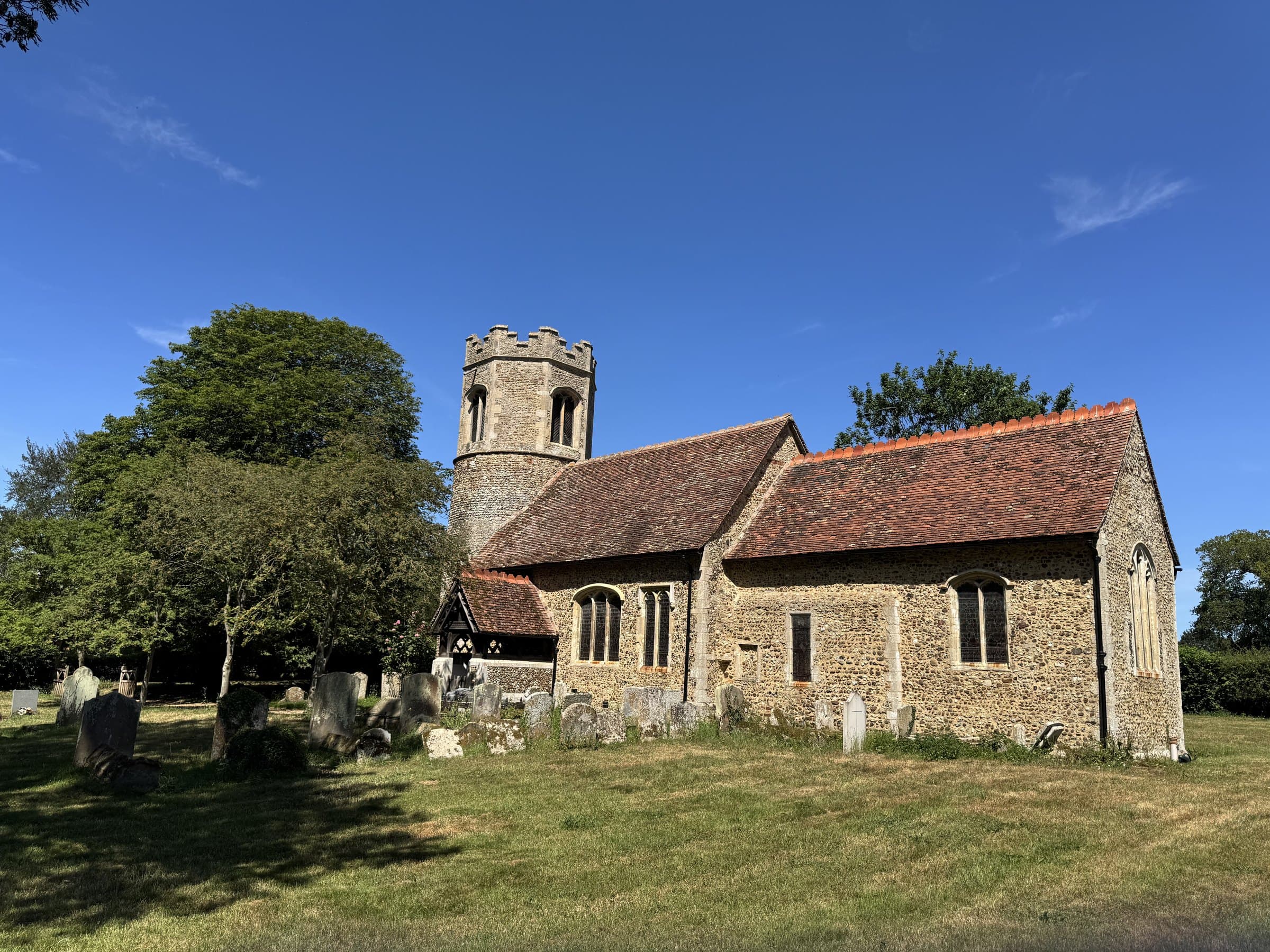
All Saints, Little Bradley is a small church with a long memory. Its parish has always been modest, and much of its history has to be pieced together from fabric, records, monuments and local research.
Chapter 1
A church in the valley
All Saints, Little Bradley is best understood first through its setting. Many Suffolk churches announce themselves from high ground, but Little Bradley sits more quietly, low in a shallow valley near streams that feed the upper River Stour. The landscape is agricultural, intimate and gently folded; the church belongs to that scale. It is a small parish church whose size reflects the community it has served.
The parish covered just 972 acres in 1912. The surviving evidence repeatedly points to a small population. Medieval tax lists, Tudor muster records, hearth tax returns and later censuses cannot be compared as though they were modern population counts, but together they tell a consistent story: Little Bradley was a place of few households, few names and long memory.
That modesty is part of the church's character. The simple nave and chancel, without aisles, make the building feel direct and human in scale. Paths still link the village towards Thurlow Green and Great Bradley, while older routes towards Cowlinge and former estate paths remind us that the church was part of a working network of fields, houses and footways.
Chapter 2
Early medieval beginnings
The earliest history of the building is genuinely debated among specialists, and All Saints wears that uncertainty honestly. The church itself is the first firm evidence for Little Bradley as an established community, and it appears to preserve very early fabric, possibly from before the Norman Conquest.
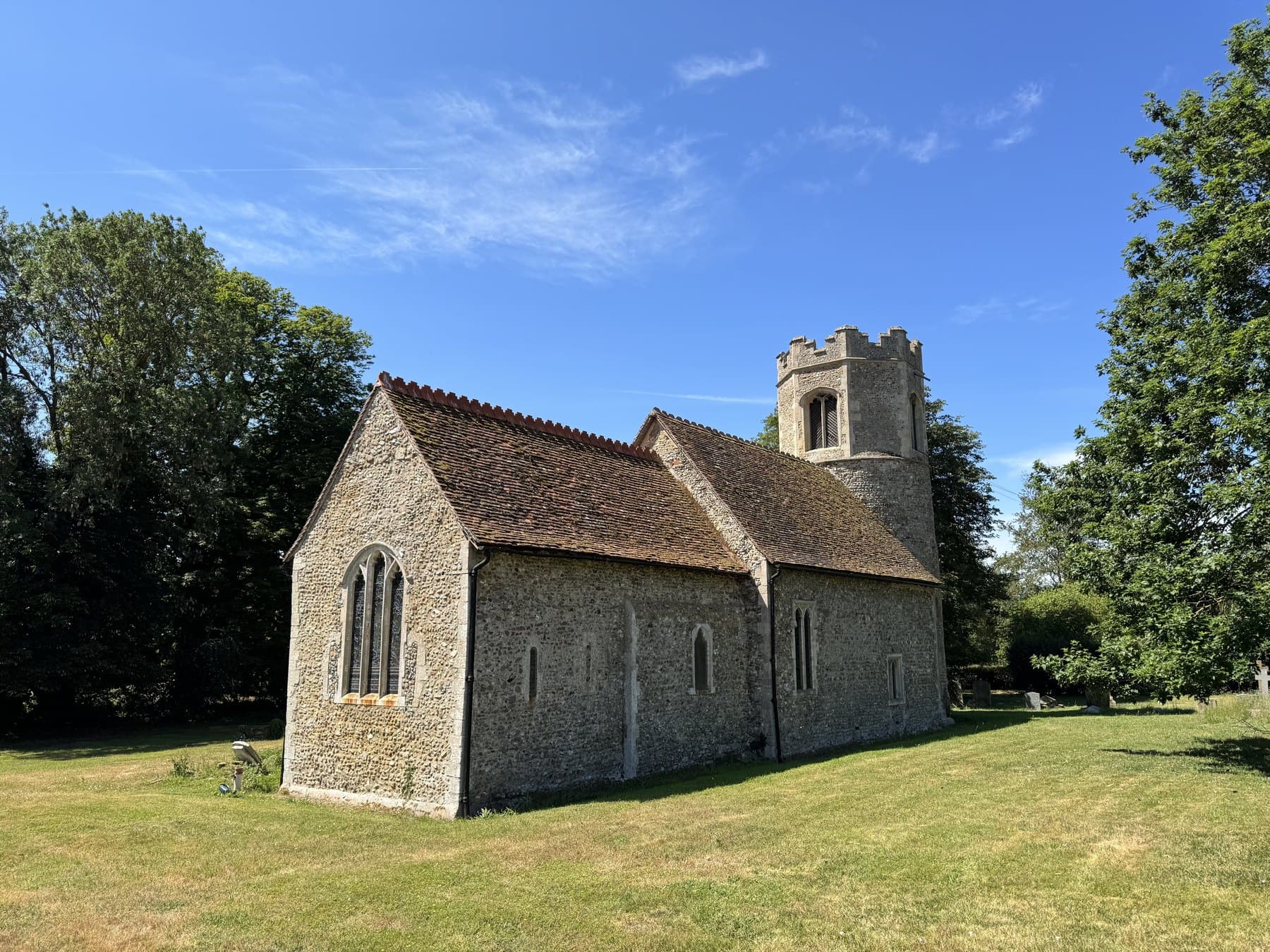
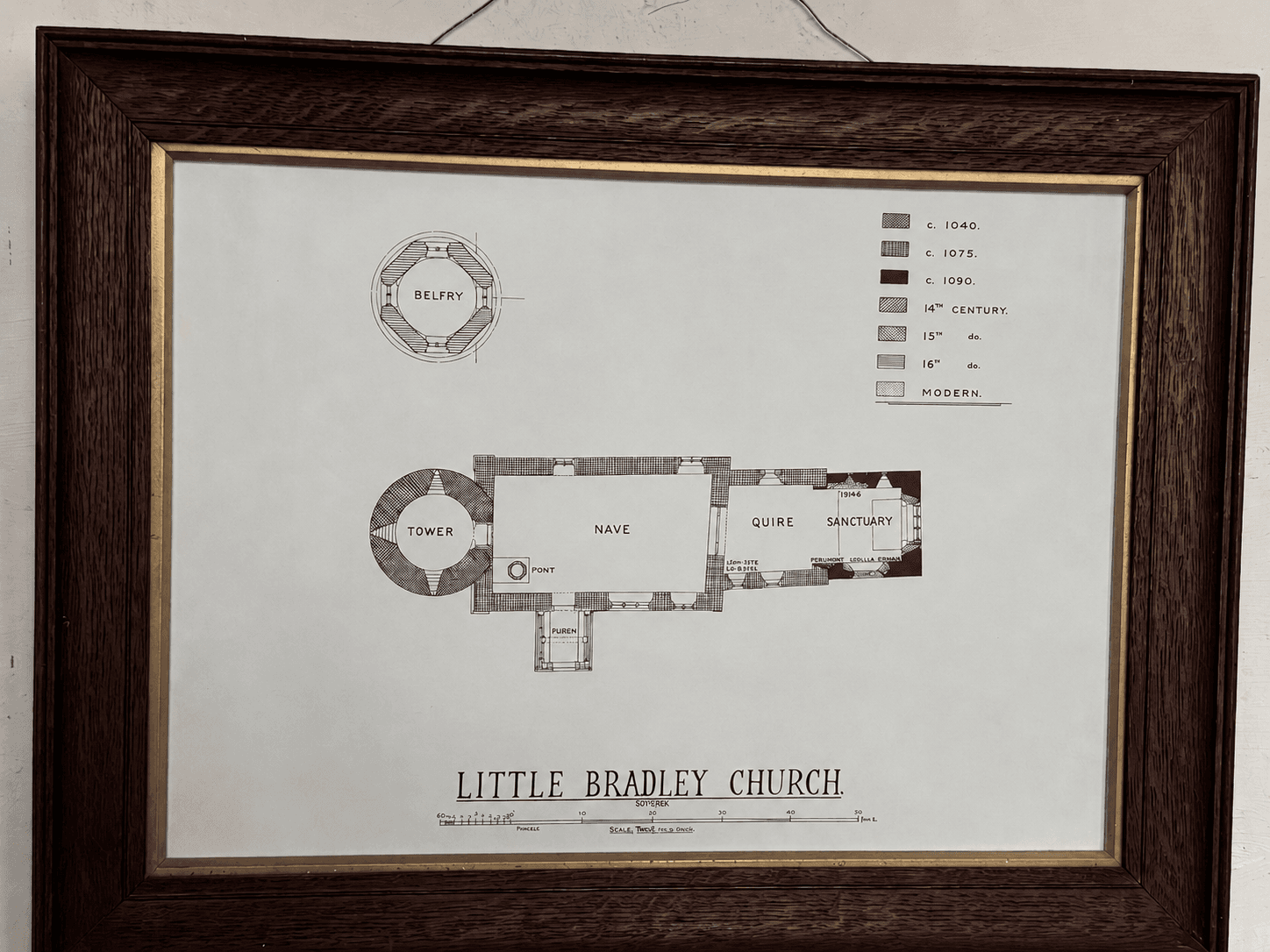
Historic England describes All Saints as an outstanding and very complete mid-11th-century church. The broad sequence is clearer than the exact dates: a simple nave and shorter chancel came first, the round tower was added at the west end, and the chancel was then raised and extended. Some of the arches and round-headed openings are associated with Norman work, although specialists differ in their interpretation of individual phases.
The building is not frozen at one date. It carries layers of ambition, worship and repair. The early phases resist precise dating, but the deep past remains visible here in stone and flint.
Chapter 3
The round tower
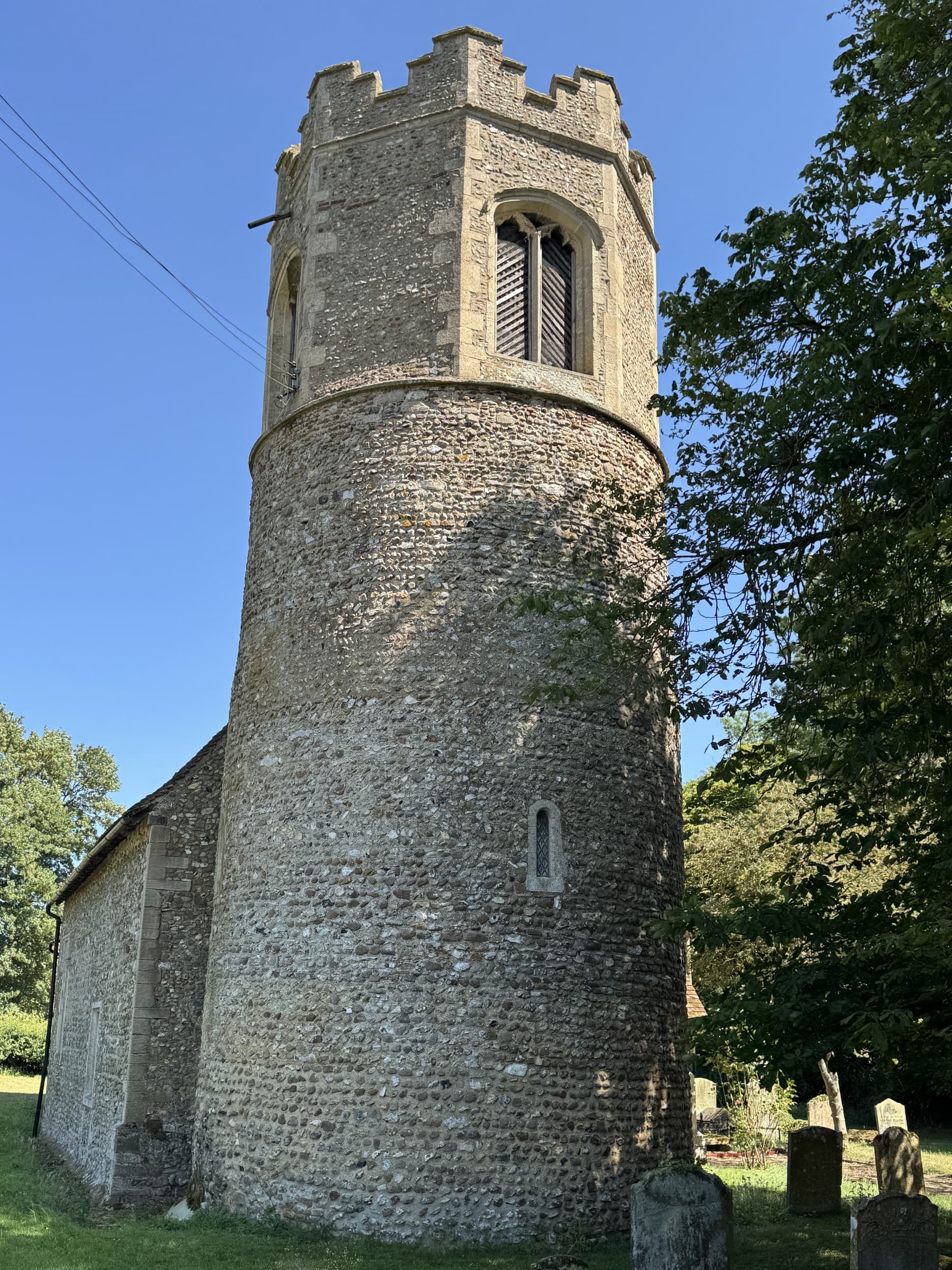
The round tower is the most recognisable feature of All Saints. Its masonry meets the straight west wall of the nave, showing that it was added to an existing church rather than built as a free-standing structure. Older suggestions that it served as a defensive lookout are difficult to sustain: the church sits low in the valley, and the surviving fabric does not support so simple an explanation.
The tower was nevertheless a major act of early building. Its thick flint walls and visible stages represent considerable labour and resources. One interpretation links round towers of this kind with the status and responsibilities of local thegns before the Conquest. That remains a possibility rather than a settled conclusion, but it helps explain why a small community might possess so striking a feature.
The tower carries both beauty and mystery: a landmark, a sign of early patronage, and a reminder that old buildings keep some of their secrets.
Chapter 4
Domesday and medieval Little Bradley
Bradley enters written history in Domesday Book in 1086. The record predates a clear distinction between Great Bradley and Little Bradley, so it cannot be read as a modern parish entry. It names landholders, describes land and people, and includes a church with fifteen acres of free land. The identity of that church remains uncertain, although the early date of All Saints makes Little Bradley a credible possibility.
The Domesday material also shows the upheaval caused by the Norman Conquest. Land passed into new hands, lordship was reorganised, and the older world of thegns and freemen was drawn into a more formal manorial order. In later centuries, Little Bradley was shaped by estates and manors including Overhall, later associated with Norley Moat, and other holdings whose histories are complex.
The full descent of these lands is intricate, but the essential point is simple and strong: this small parish was never isolated from national history. Domesday, Norman lordship, medieval landholding and local worship all meet in the story of the church.
Chapter 5
The chancel monuments
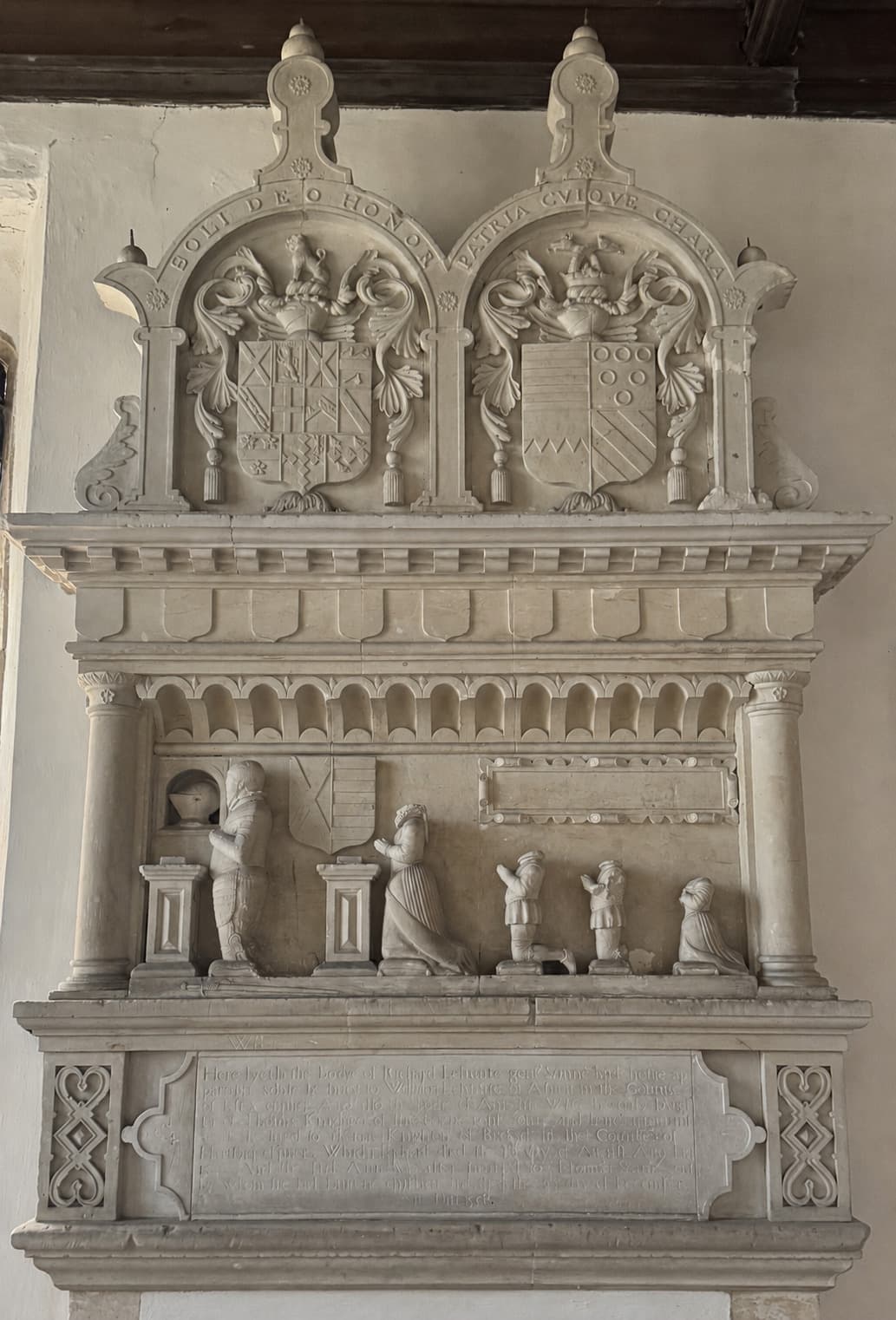
Inside the church, the chancel monuments bring the story forward into the Tudor and early Stuart period. In a small space there are memorials linked with several leading families, including the Underhills, Knightons, Le Hunts and Soames. Their stories form a connected sequence, with land and influence often passing through heiresses and marriage.
Some details of the Underhill and Knighton families' origins and landholding remain conjectural, but the monuments, arms and tax records show that these families mattered in Little Bradley. They belonged to a world in which local gentry could fund improvements, hold land, marry strategically and leave visible signs of status in the parish church.
What matters for visitors is not the full genealogy but the human fact that the church still holds traces of the people who worshipped, inherited, endowed and remembered here. Their monuments turn the chancel into a small archive of stone, brass and local ambition.
Chapter 6
John Daye, Alice Le Hunt and the Reformation
The most nationally resonant story in the church is the link with John Daye and Alice Le Hunt. Alice came from the Little Bradley Le Hunt family and became the second wife of John Daye, one of the most important Protestant printers of Tudor England. Daye is especially remembered for printing editions of John Foxe's work on the Protestant martyrs, one of the most influential religious books of the Elizabethan age.
Daye was imprisoned during the reign of Mary I before returning to print under Elizabeth I. Alice's brother John Le Hunt also supplied material and financial support connected with a later edition of Foxe. The family monuments at All Saints bring those national events into the intimate setting of a village chancel.
It is a remarkable connection for so small a parish: through one family and one marriage, Little Bradley was joined to the religious and print culture of the English Reformation.
Chapter 7
Restoration, windows and later memory
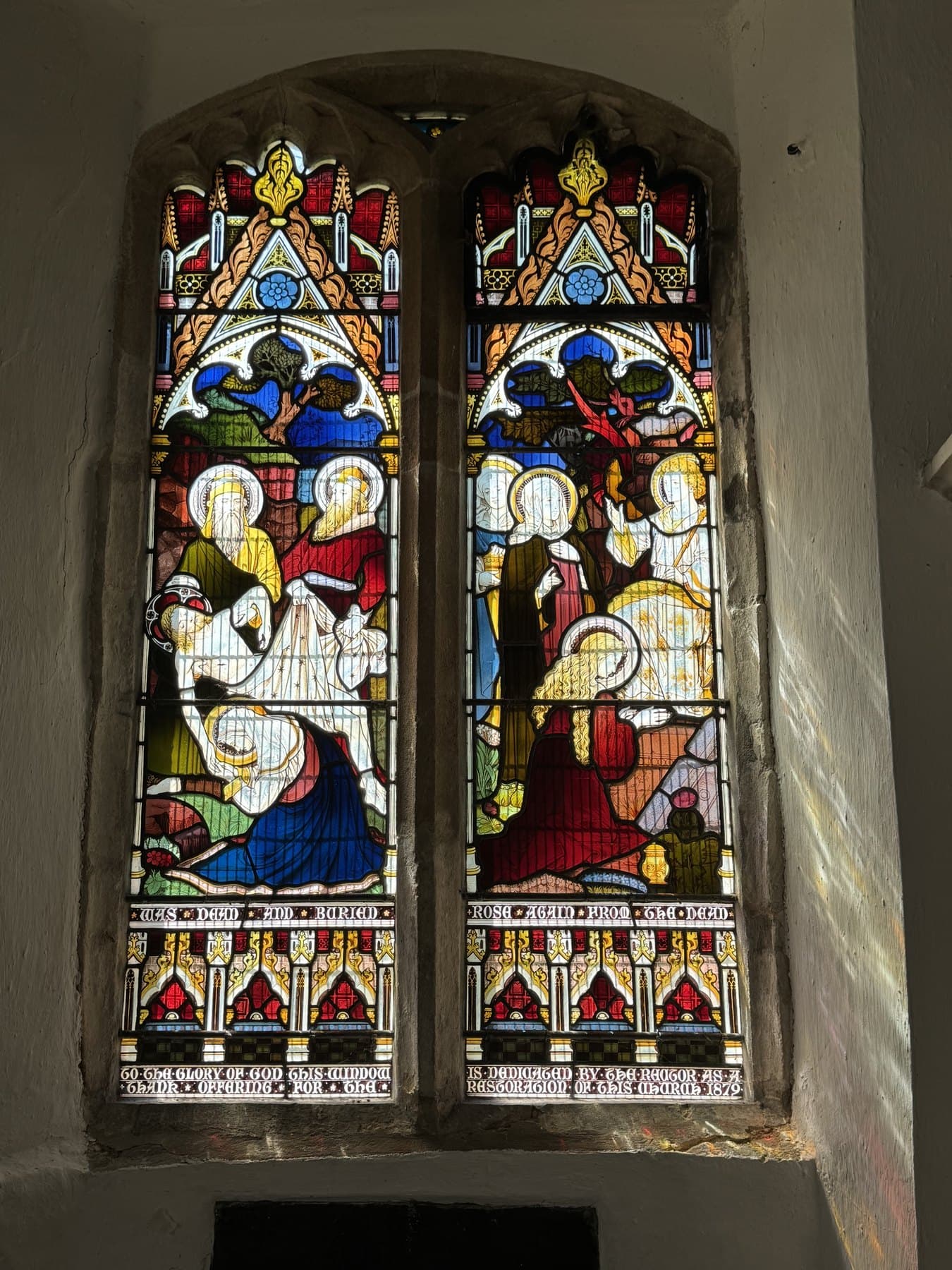
All Saints is ancient, but it is not unchanged. The Victorian period brought major restoration, especially during the incumbency of Henry Alston. Many new windows were dedicated to members of his family, making the stained glass part of the building's later story as well as part of its beauty. The church is not simply the work of one early period, but a layered place where successive centuries have left their mark.
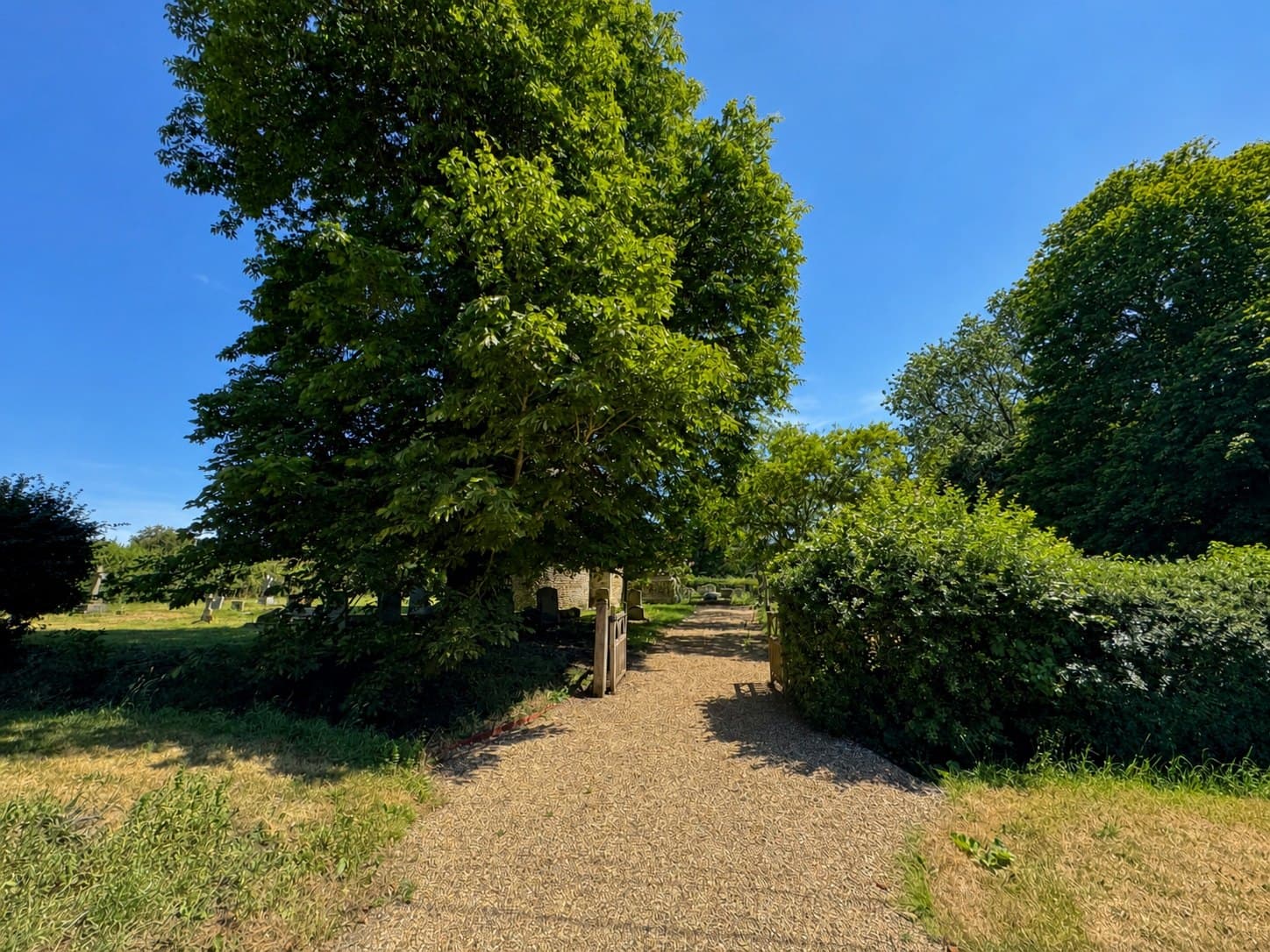
The churchyard adds another layer of memory. Inscriptions recorded in the late twentieth century preserve names from village families across several centuries: Bedfords, Wimpresses, Crows, Lamprells, Slaters, Dearsleys and others. Some stones are difficult to read, while more recent memorials speak of grief still close to living memory. Together they remind visitors that the church is not only an architectural survival, but also a place of affection and local continuity.
Several Little Bradley men enlisted during the First World War. Thomas Wimpress, who had lived and worked in the parish, served with the 7th Battalion, Suffolk Regiment. He was killed on 3 July 1916 during the Battle of the Somme and is commemorated on the Thiepval Memorial.
Chapter 8
A living church today
The history of All Saints matters because the church is still here. Its smallness is not a weakness; it binds the building closely to its parish, its landscape and the people who have cared for it. Visitors can encounter that story quietly in the flint of the tower, the line of the nave, the memorials in the chancel, the colour of the glass and the path through the churchyard. Keeping the church open, cared for and understood honours both its distant origins and the generations who have made Little Bradley their place of worship, work and memory.
Historical research note: This page draws on research brought together in Wendy Barnes's Little Bradley booklet, © Wendy Barnes 2014.