1563
Foxe is printed
Daye printed Foxe's Book of Martyrs, one of the best-known works of English Protestant memory.
History
The chancel at All Saints holds a memorial where a national story of print, faith and Reformation is remembered through Alice Daye's act of commemoration.
The Human Story
John Daye was among the most significant printers of Elizabethan England. His name is especially associated with Foxe's Book of Martyrs, or Acts and Monuments, first published in 1563: a vast Protestant history of persecution, witness and reform.
Yet All Saints is not only the burial place of a famous printer. It is also the church of Alice Daye, born Alice Le Hunt of Little Bradley, who chose to commemorate her husband here. The decision gives the memorial its tenderness: a life of London printing and public controversy brought back to a Suffolk chancel.
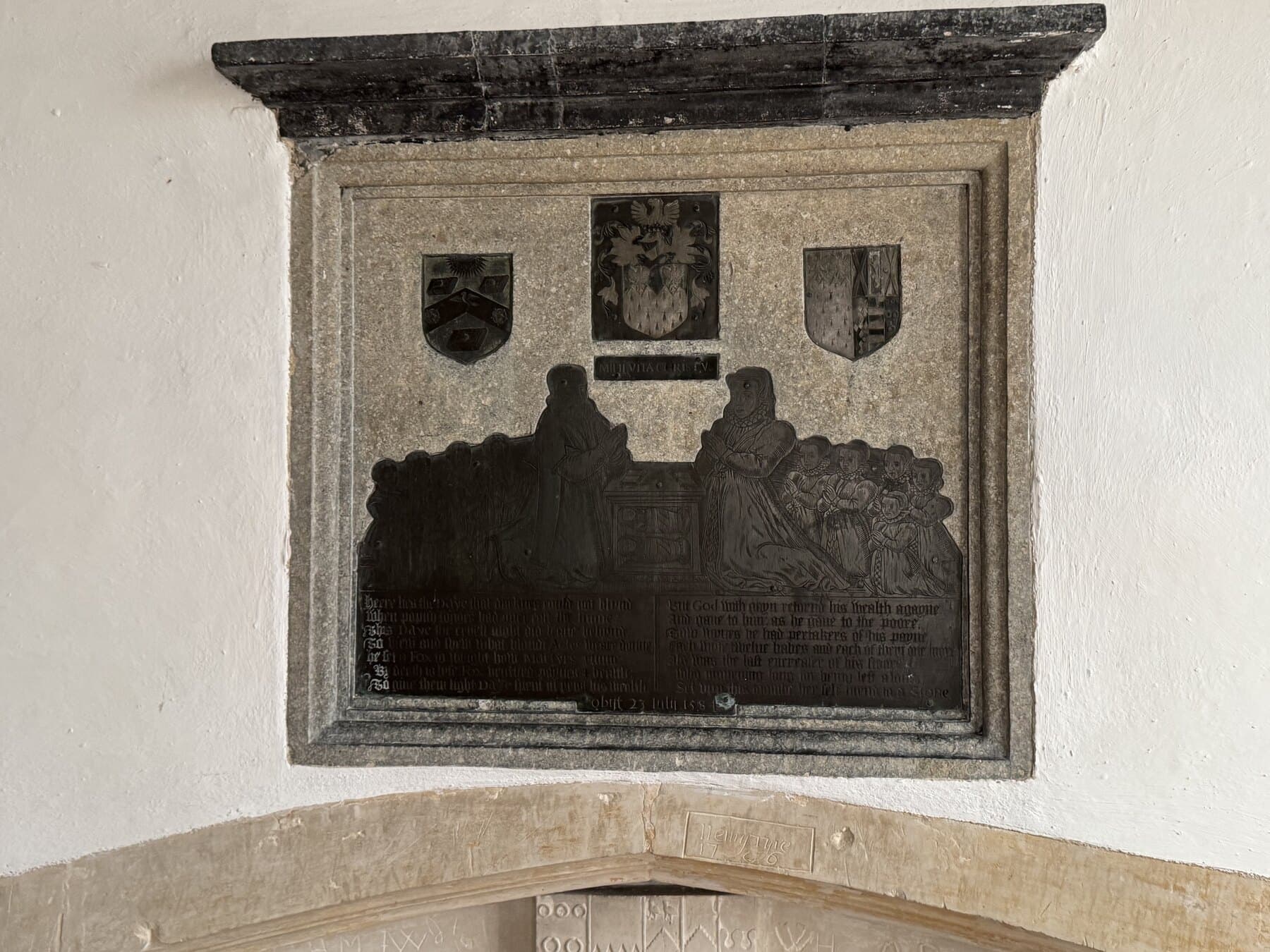
The memorial brings the Daye family into view, showing John and Alice at prayer with their children. It connects Little Bradley directly to Elizabethan print culture while remaining an intimate record of a family and its grief.
Alice commemorated her husband through a clever Elizabethan poem, turning Daye's name into a play of light and darkness, Foxe and martyrs, print and memory. It is learned, grieving and public, and it gives the chancel a rare human immediacy.
1563
Daye printed Foxe's Book of Martyrs, one of the best-known works of English Protestant memory.
1584
John Daye died on 23 July 1584. Alice's act of commemoration brought his life in print and faith into the chancel at Little Bradley.
1880
The Stationers' Company later gave a nave window as a mark of respect to Daye, one of the Company's early Masters.
The Poem
The inscription does more than record a death. It uses Daye's name as an image of daylight overcoming darkness, sets Foxe and the martyrs within the world of print, and closes with Alice mourning so long that she is, in the poem's final image, turned to stone. The effect is both intellectual and deeply human.
Daye and darkness
Foxe and the martyrs
Printing as light
Loss and remembrance